
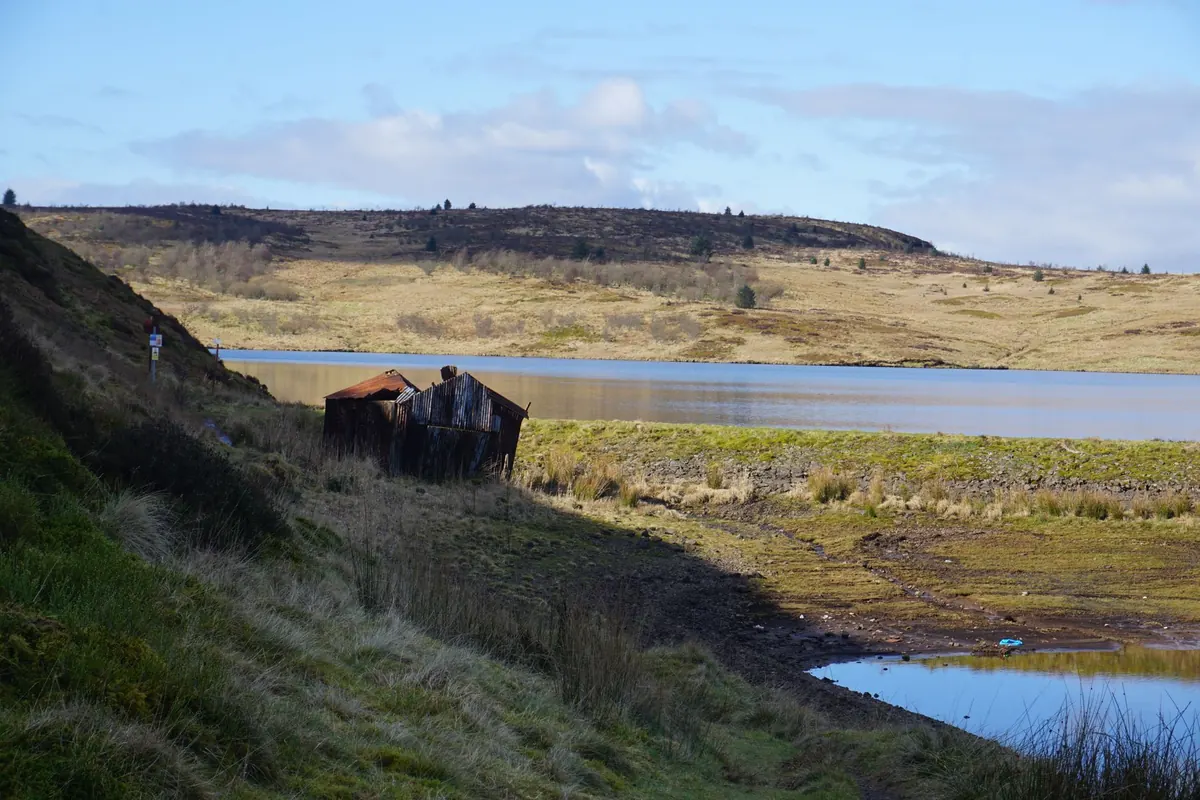
A cabin at the end of a mile of rough track, with nothing beyond it but loch, bog and hill, is one of the great pleasures of travelling in Scotland. It is also a booking that can go wrong in ways a hotel never does. The listing photographs show the view; they rarely show the gradient of the access road, the state of the water supply in February, or whether your phone will work when you actually need it. None of that is a reason to stay at home. It is a reason to ask six or seven questions before you pay a deposit.
The access track matters more than the view
Every remote stay begins with the last few miles. What looks like a charming approach on a map can be a rutted farm road with a ford in the middle and no turning space at the end. Ask the owner directly what the final stretch is surfaced with — tarmac, gravel, or something closer to a track across a field — and how far it runs from the public road.
These are the questions worth putting in an email rather than guessing at:
- What is the last mile like? Width, gradient, passing places, any water crossings.
- Will an ordinary hatchback manage it, or is decent ground clearance needed?
- Is the track gritted or cleared in winter, and by whom?
- If we cannot reach the door, where can we safely leave the car?
- Is the road shared with a working farm, estate vehicles or other guests?
If the answer is "you'll be fine in anything", ask for a photograph of the worst section. Vague answers about access are worth taking seriously, because the person who has to reverse half a mile in the dark is you.
Heating: what is included, and what you will carry
"Off-grid" means very different things from one cabin to the next. For some owners it means a wood burner in a well-insulated bothy-style building. For others it means a small solar and battery system with strict limits on what you can run at once.
Ask whether the main heat is a wood burner, whether logs and kindling are included or bought locally, and how much fuel you will need for the length of your stay. Ask whether there are electric heaters as back-up, and whether the power comes from the mains, solar or a generator with set running hours. If the cabin takes four hours to warm through, arriving at nine in the evening in November is a different experience from arriving at four.
Two more things. Check there is somewhere to dry wet boots, waterproofs and gloves — a cold, damp cabin with no drying space is miserable after a day on the hill. And check what the system will not tolerate: some solar setups will not happily run a hairdryer, an electric kettle and a laptop charger together, and if hot water comes off the same supply, ask how long a shower lasts.
Water: mains, spring or a walk with a bucket
Many remote cabins are on a private supply from a spring or borehole. That can be perfectly good, but the details matter. Ask whether the water is filtered or treated, whether it is safe to drink without boiling, and whether you should bring bottled water for the first night. Private supplies can run low in a dry summer and freeze in a hard winter, and owners sometimes ask guests to be economical with hot water.
Toilets deserve the same attention. Composting toilets usually want sawdust and no wet wipes. Septic systems dislike bleach, fat and anything labelled "flushable" that is not. Chemical cassettes need emptying in the right place. Ask which type you are getting, and if the toilet is in a separate building, ask how far the path runs and whether it is lit.
Signal, Wi-Fi and being genuinely out of contact
Mobile coverage in the Highlands and Islands is patchy, and terrain makes a mockery of coverage maps. Check the postcode on a network coverage checker, but treat the result as a rough guide — a glen can swallow a signal the map promises. Then ask the owner which network works best, whether there is Wi-Fi and how fast it is, and whether there is a landline.
A few habits make an off-grid stay much easier:
- Download maps, booking details and directions before you leave the last town.
- Bring a power bank; charging points may be limited.
- Tell someone at home your route, your arrival date and when you will next have signal.
- Keep the owner's number and an emergency contact written on paper.
- If you are walking or paddling, consider a personal locator beacon or satellite messenger. Not because something will go wrong, but because it is the only thing that works where nothing else does.
If you need to work from the cabin, ask for a speed in Mbps and whether the connection is metered. "Wi-Fi available" can mean anything from a fibre line to a signal that just about carries an email.
Cancellation, deposits and the rest of the small print
This is where remote bookings differ most from a hotel chain. Many cabins are one-unit businesses, so a late cancellation is a lost week rather than an empty room. Terms are often strict, and they are usually written clearly enough if you read them properly.
Before paying, check the cut-off date for a full refund, whether any deposit is non-refundable, and what happens if the track is impassable or a storm cuts the power. Look at the damage deposit — how much, how it is returned, what counts as damage. Note arrival and departure times and how keys are collected. Check the rules on extra guests, dogs, outdoor fires and whether you have to take your rubbish away with you.
Anything promised by phone should be confirmed in writing, whether that is an early check-in or a lift up the track with shopping. If the cancellation terms are strict and the trip matters to you, travel insurance may be worth the cost — read the policy wording rather than assuming it covers a cancelled weekend, and take advice if you are unsure.
Questions to send before you pay
Copy these into a message to the owner and you will have covered the ground that catches most people out:
- What is the final approach like, and what vehicle do you recommend?
- How is the cabin heated, and are logs included?
- Where does the water come from, and is it safe to drink?
- What toilet is it, and are there any rules for using it?
- Which mobile networks work, and is there Wi-Fi?
- What are your cancellation and deposit terms, in writing?
A good owner will answer all of this without hesitation, and often volunteer something useful you had not thought to ask — the best route in, the nearest shop, the fact that the shower is lukewarm at best in December. A reluctant or evasive answer is information too, and it is much cheaper to find out now than at the end of a dark track with a boot full of shopping.
Photo: Spencer Haynes / Pexels