
You booked the weekend in February, when the photos looked golden. The forecast now says rain from Friday afternoon to Sunday lunchtime, with a brisk westerly for company. At that point, the difference between a memorable trip and three damp, grumpy days comes down to a decision you have already made: the building you are sleeping in.
Off-grid cabins and glamping pods get lumped together as cosy alternatives to a tent. They are not the same thing, and a wet weekend exposes the gap quickly.
Two Different Kinds of Shelter
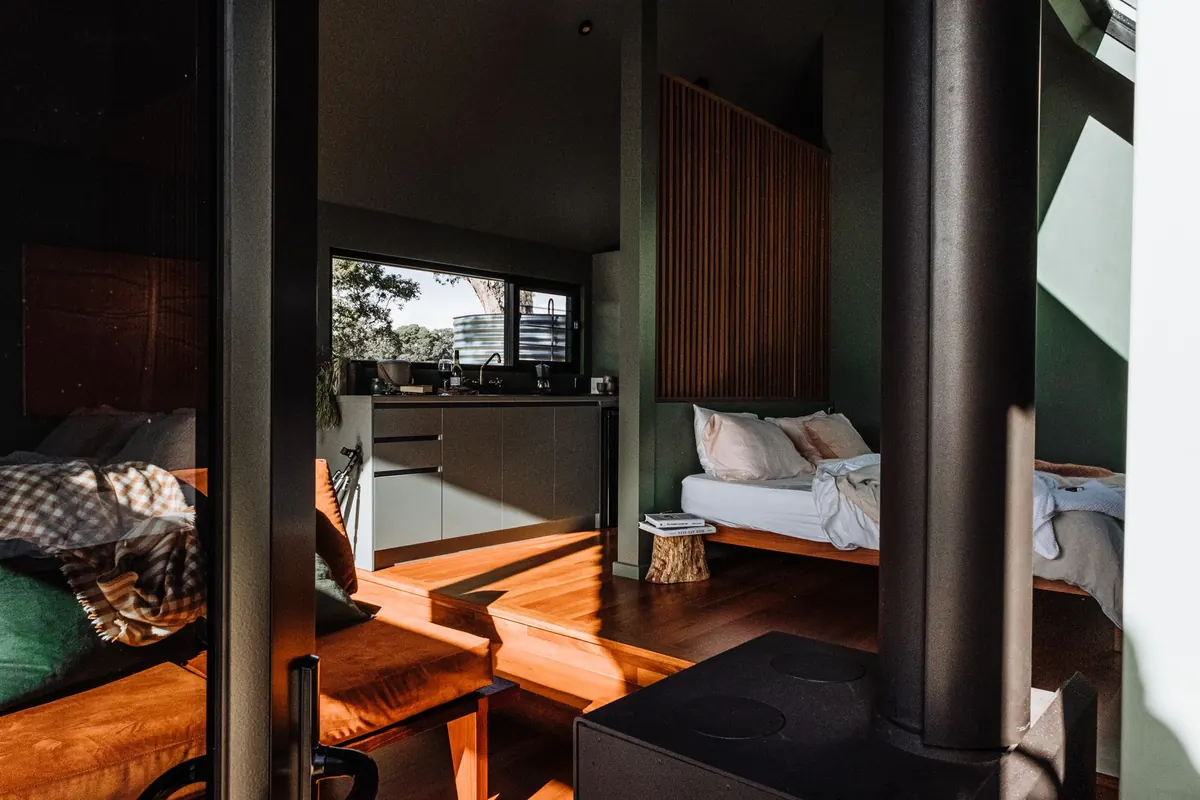
An off-grid cabin is normally a timber building with more floor space than you expect: a living area with a wood burner, a separate bedroom or a sleeping mezzanine, and often a covered porch. "Off-grid" can mean anything from a solar panel running lights and a phone charger to genuinely no mains power, with water carried in and a composting loo out the back. Ask which version you are booking, because those two cabins offer very different weekends.
A glamping pod is a compact insulated shell, usually on a farm, campsite or holiday park. Pods tend to sit on hard standing with a small deck, normally have mains electricity and are often connected to water. What they rarely have is room. A family of four with wet gear fills a pod quickly, and the shower block may be a two-minute walk across an open field.
Comfort Hangs on Heat and Air
Warmth is the easy part. Dryness is what makes a small space feel habitable.
A wood burner, a plug-in heater or a well-insulated pod will all keep you comfortable. Damp air is the problem. Two adults plus wet coats can push the humidity in a sealed pod up within an hour, and everything starts to feel cold and clammy.
Look for ventilation as carefully as you look for heating. Trickle vents, an opening window and a ceiling vent matter more than the colour of the cushions. In a cabin, check what the wood supply includes: a basket for the first night is common, and you will usually want more. Wet wood is miserable — it smokes, gives off little heat and coats the glass. Ask whether the logs are seasoned and whether kindling and firelighters come with them. A hot water bottle and a spare blanket cost nothing to pack and earn their place.
Drying Space: The Detail That Decides Your Weekend
Four waterproof jackets, two pairs of boots, gloves, hats, a rucksack and a soaked map have to go somewhere. In a cabin with a porch, a boot tray and a line above the stove, that is a ten-minute job. In a pod with no entrance lobby, it becomes an evening of draping things over chair backs while the windows steam up.
Ask the owner one direct question before booking: where do wet walking gear go? A vague answer tells you plenty. Then pack for it:
- A folding drying rack or a couple of short bungee lines — they take up almost no space in the car.
- A dry bag for spare layers, so at least one set of clothes stays genuinely dry.
- Bin bags or a small lidded box for muddy boots.
- A microfibre towel, which dries overnight far more reliably than cotton.
- Slippers or sandals for inside, plus a mat by the door.
One warning about drying. Never drape wet clothing directly over a gas or electric heater, and keep it well clear of a wood burner flue. If you are drying inside a sealed pod, open a vent. Otherwise the moisture you are trying to remove ends up on the windows and in your sleeping bag.
Facilities: Cooking, Washing and the Middle-of-the-Night Walk
Water and power
Off-grid water often arrives in containers or from a gravity tank, which shapes your weekend more than you might expect. Washing-up happens in a bowl with a kettle of hot water, and showers are short or non-existent. Cooking on a two-ring gas hob is perfectly workable — one-pot stews, pasta, porridge — but plan food that suits it rather than a three-course menu.
Pods usually offer a kettle, a small fridge and a hob or microwave, plus mains power for charging phones and drying hair. When the weather is truly grim, that kettle and a hot shower block can rescue an afternoon.
Loos and showers
This is where the two options diverge most. An inside flushing loo in a cabin is worth a great deal at 3am in horizontal rain. Off-grid cabins may offer a composting toilet, a chemical loo or a short walk to a shared block. Pods are often similar, though en-suite versions exist at a higher rate.
If you are travelling with young children, an older relative or anyone who gets up in the night, put an indoor loo at the top of your list and treat everything else as negotiable.
What You Are Actually Paying For
Pods usually carry a premium on popular weekends and school holidays, partly because they sit on serviced sites with power and showers, and partly because they photograph beautifully. Off-grid cabins can look cheaper on the listing, but add the extras: firewood, gas, a longer drive up a rough track, and a pub meal because cooking facilities are limited.
Work out the total for the weekend rather than the nightly rate, including fuel, food and any deposit. Two nights in a well-equipped pod and three nights in a basic cabin can come out surprisingly close. Check the cancellation terms too — if the access track floods or a tree comes down, you want to know where you stand. For an expensive booking, a flexible policy or travel insurance is sensible, and it is worth reading the small print yourself before you pay.
Which One Suits Your Trip?
- Choose an off-grid cabin if you want space to spread out, you are happy to manage a fire, you value a porch for wet gear, and you do not mind a short walk to the loo.
- Choose a glamping pod if you want mains power, a hot shower and a short hop from the car, and you are travelling light — a couple with a weekend bag, not a family with a roof box.
- Choose either, but pay for the en-suite if children or reluctant night-walkers are coming along.
Before You Book: A Wet-Weather Checklist
- Ask what "off-grid" means in practice: power, water, loo, phone signal.
- Ask how far you park from the door, and whether the track suits a normal car.
- Ask about heating, and whether fuel is included or extra.
- Ask where wet kit dries.
- Check the cancellation policy, and insure the trip if it costs a lot.
- Pack waterproof trousers, spare layers in a dry bag, a head torch, a drying rack and a good book.
Then accept the forecast. A wet weekend in a warm cabin with a fire, a stew and a pack of cards beats a sunny one spent queuing for a shower block. Pick the building that suits how you actually travel, and the rain becomes part of the trip rather than the end of it.
Photo: Rachel Claire / Pexels