
Two days of walking, one night in a bunkhouse, a pack on your back and a pub meal at the end of it. That is a realistic first multi-day hike in Britain, and it does not demand heroic fitness. What it does demand is a plan: a route your legs can manage, a bed at the right end of each day, and a bag you are willing to carry for six hours. Get those three things roughly right and the rest usually looks after itself.
Start with the walk you actually want
Most first multi-day trips fail on ambition, not on fitness. A three-day traverse of the Cairngorms is a wonderful thing; it is also not a first walk. Be honest about what you enjoy. If you like valleys, rivers, woodland and a village every few hours, plan around that. If you want one summit, build the trip around a single hill and keep everything else low.
Good shapes for a first outing include a short section of a long-distance path, a two-night circular route linking two or three places to sleep, or an A-to-B walk with a bus or train at each end. Linear routes are easier to plan than loops because you are not constantly hunting for linking paths, and public transport in the UK hill areas is often better than people expect.
Choose a route and buy the right map
Ordnance Survey Explorer maps at 1:25,000 show walls, field boundaries, gates and paths in useful detail; Landranger maps at 1:50,000 cover more ground and suit open hill country. Harvey maps are excellent for some upland areas. If you use a phone app, download the tiles before you leave, because signal in the hills is unreliable, and carry paper as well.
Guidebooks are genuinely useful for this stage. They offer tried-and-tested stages, list accommodation and note where the path gets rough. Use them as a starting point, then trace each day on the map yourself. If the map shows a day with 700 metres of climbing and no water source, that matters more than the mileage printed in the book.
Set a daily distance you will actually enjoy
Beginners routinely overestimate. With a pack, three to four kilometres an hour is a realistic pace on mixed ground, and considerably slower uphill. For a first trip, eight to twelve kilometres (five to seven miles) a day is plenty, especially in the Lake District, Snowdonia or the Scottish Highlands.
A rough timing rule
The traditional hill-walking estimate is one hour for every five kilometres, plus one hour for every 600 metres of ascent. Add time for stops, photographs and a long lunch. Then add a buffer. A fifteen-kilometre day with 900 metres of climbing is a serious day out, not a stroll, whatever the map suggests.
Also plan around daylight. In winter, useful daylight can be gone by half four, which changes everything; in midsummer you can walk until ten at night. Aim to arrive at your bed by mid-afternoon so that a slow day does not turn into a dark one.
Sort out where you will sleep
Accommodation is the part of planning that takes the longest, so do it early. Your options in Britain are broad:
- YHA and independent hostels — cheap, sociable, often in exactly the right place. Book ahead.
- Bunkhouses — simple, self-catering, common in the Dales, Pennines and Scotland.
- B&Bs, pubs with rooms and small hotels — comfortable, and usually happy to dry wet kit.
- Campsites — lightest on the wallet, heaviest on the back. Check whether they take tents without booking.
- Bothies — free, basic shelters in remote areas. No booking, no facilities, no guarantee of space.
Two practical warnings. First, rural pubs often stop serving food early, and some close on Mondays and Tuesdays, so check before you commit to a village. Second, wild camping in England and Wales generally requires the landowner's permission; in Scotland, access rights allow lightweight wild camping in some places, but check current guidance for where you are going. Some long-distance routes have luggage transfer services, which let you walk with a day sack, so it is worth asking locally.
Keep your pack light
Weight is the single biggest factor in whether your first trip feels like a pleasure or a punishment. Aim for around ten kilograms including food and water, and treat that as a ceiling rather than a target. The essentials for a UK hill walk:
- Waterproof jacket and trousers, plus a warm mid-layer and a spare baselayer
- Map, compass, and the knowledge to use them together
- Head torch with spare batteries, whistle, basic first aid, blister plasters
- Water bottles or a bladder, and food for the day plus an emergency ration
- Hat, gloves, sun cream and sunglasses — British weather manages both extremes
- Footwear broken in well before the trip, and socks you have tested on a long walk
Everything else is a negotiation with comfort. You do not need a spare pair of trousers for two nights.
Plan for weather and the what-ifs
Check the Met Office forecast and, for mountain areas, the Mountain Weather Information Service, the night before and again over breakfast. Be willing to change the plan: a low-level valley walk in driving rain beats a ridge in cloud.
Before you set off, tell someone your route, your overnight stops and when you expect to check in. Carry enough to survive an unplanned night out. In an emergency in the UK, call 999 or 112 and ask for the police, then mountain rescue. If you regularly walk in areas with patchy signal, register for the emergency SMS service in advance.
On the path itself: follow waymarks, close gates behind you, keep dogs on a lead around livestock, and take everything home with you. If you have a heart condition, joint problems or have not exercised in a while, have a word with your GP before a hill walk.
The week before you go
- Walk a short version of day one with your loaded pack, even if it is just a local loop.
- Confirm every booking and check arrival times and whether breakfast is included.
- Download offline maps and save your route where you can find it without signal.
- Check transport at both ends — the last bus of the day is not the one to miss.
- Leave a copy of the plan with someone at home.
Then make day one the shortest day. Arriving early, unhurried, with dry feet and a pint in front of you is the best possible start to a walking habit that can last decades.
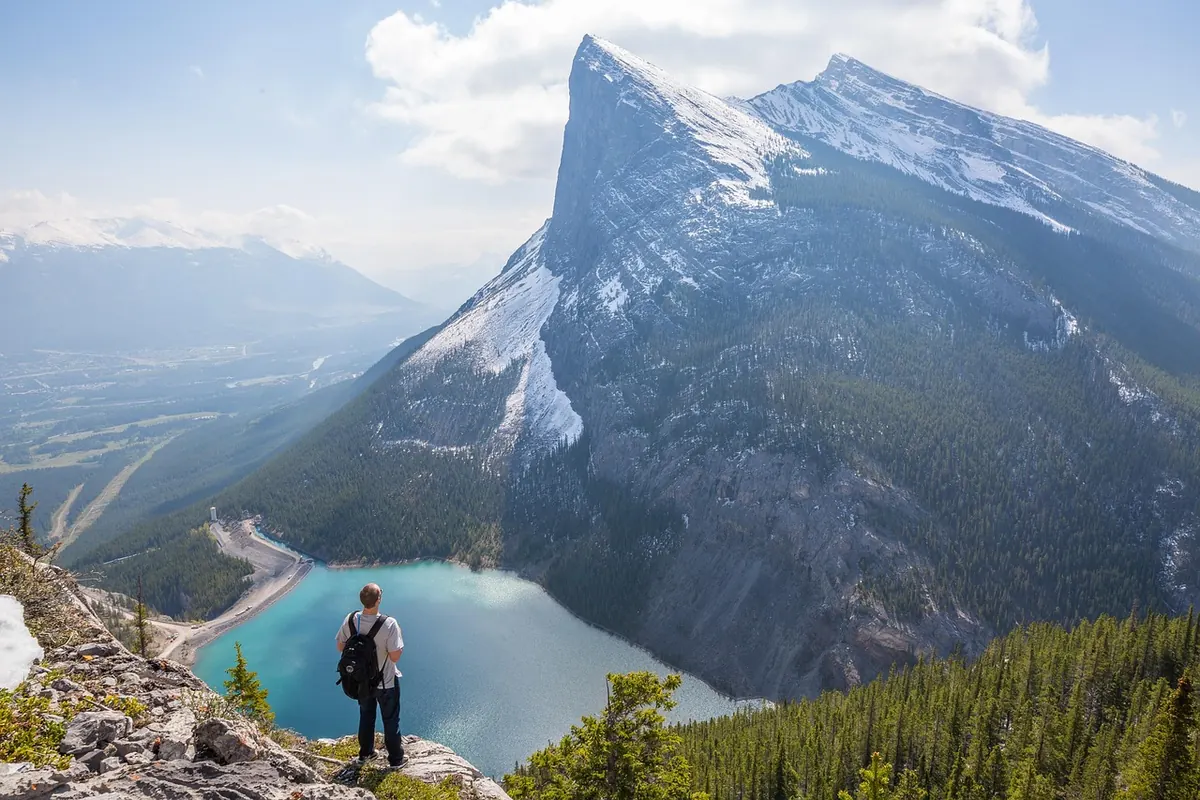
Photo: Pexels / Pixabay