
The British hills are rarely hostile, but they are frequently inconvenient. A forecast of "light showers" can mean four hours of drizzle on the fells; a bright morning on Kinder Scout can end with you eating your sandwiches behind a gritstone wall while the wind tries to take your hat. None of that is a reason to stay at home. It is a reason to pack with a bit of thought.
A day pack for a UK walk has four jobs: keep you dry, keep you warm, get you back to the car, and cope with the thing you did not plan for. Here is what earns its place.
Layers you can adjust while you walk
Treat clothing as a system rather than one outfit decided at the car park. The old advice to start cold holds up: if you feel snug standing around at the trailhead, you will be overheating ten minutes into the first climb.
Against your skin
A synthetic or merino base layer moves sweat away and still insulates when damp. Leave the cotton t-shirt at home; it holds water and then chills you. Carry one spare dry top in a dry bag — a clean, dry layer at the end of a wet day is worth more than any gadget.
Over the top
A fleece or light synthetic mid-layer does most of the work on a British hill. In winter or on a high, exposed route, add a light insulated jacket for stops. Hat and gloves are not winter-only items: a thin pair of liner gloves and a buff weigh almost nothing. In summer, swap them for sunscreen, sunglasses and a hat with a brim.
Waterproofs: jacket and trousers
If there is one item people leave behind, it is waterproof trousers. A jacket keeps your top dry while your legs soak up the rain and pass it down into your boots. A cheap pair of over-trousers folded in the lid of your pack is far better than none, and you will be glad of them on a windy col even when the rain holds off.
Look for taped seams and a hood that fits over a hat, and check the jacket still works before the season starts — a reproofing wash is cheaper than a new one. Keep both within easy reach, not buried at the bottom. If you only stop to dig out your waterproofs when you are already wet, you have left it too late.
Navigation that does not depend on a signal
Carry two independent systems. The first is a paper map and a compass, in a case, covering the area you are actually walking in — the relevant Ordnance Survey or Harvey sheet, not a printout of a route description. The second is a phone with offline mapping already downloaded, plus a power bank to keep it alive. In deep valleys and on many upland plateaus there is no signal at all, and a dead battery is just a heavy rectangle.
The skill matters as much as the kit. Know roughly where you are at all times, not only when the path is obvious. Set the map before you leave the car. In mist, take a bearing, follow it on the ground, and count your paces between features. Learn to read and give a grid reference, and consider adding a location app such as what3words so you can pass an accurate spot to the emergency services if you need to.
Before you set off, tell someone your route and your expected return time, and agree what they should do if you are not back. That single message is the most useful piece of safety equipment you own. It is also worth knowing how to call for help in the UK hills: dial 999 and ask for the police, then mountain rescue.
Food, water and something hot
For a half-day walk, around a litre to a litre and a half of water is a sensible starting point, more in warm weather or on a long, exposed route. Refills on the tops are not guaranteed, and upland streams in sheep country carry a risk of infection, so carry what you need rather than banking on a drink from a beck.
Eat before you are hungry and drink before you are thirsty. A decent lunch, plus snacks you actually like — oatcakes, nuts, dried fruit, a flapjack — keeps the last hour of a walk pleasant rather than grim. In winter, a flask of soup or tea is a small luxury that also warms your hands. Keep one or two extra bars in the pack permanently as emergency rations, and check the dates now and then.
The emergency kit you hope never to open
This is the small, boring, light stuff that turns a difficult afternoon into a story rather than an incident.
- Headtorch with working batteries, checked before you leave. A short delay on the hill can mean finishing in the dark, and a phone torch will not do.
- First aid kit: plasters, blister dressings, a small roll of tape, painkillers and any personal medication. If you have a long-term condition, ask your GP or pharmacist what you should carry and how to store it.
- Foil blanket or emergency shelter — light, cheap, and the thing that keeps an injured walker warm while help arrives.
- Whistle on a cord. Six blasts, pause, repeat: the recognised distress signal.
- Repair kit: a metre of duct tape wrapped round a pencil, a spare lace, and a small multi-tool.
If someone is hurt, keep them warm and sheltered, make them comfortable, and call for help early rather than waiting to see how things develop. An emergency contact card in the top of the pack takes two minutes to write.
The day hike packing checklist
These eighteen items cover the vast majority of British day walks. Adapt them for season and terrain — add an ice axe and crampons only if you have the training to use them — and print the list so it lives by the door.
- Rucksack, 20–30 litres
- Waterproof jacket with a hood
- Waterproof trousers
- Fleece or mid-layer
- Insulated jacket (winter or exposed routes)
- Spare dry base layer
- Hat
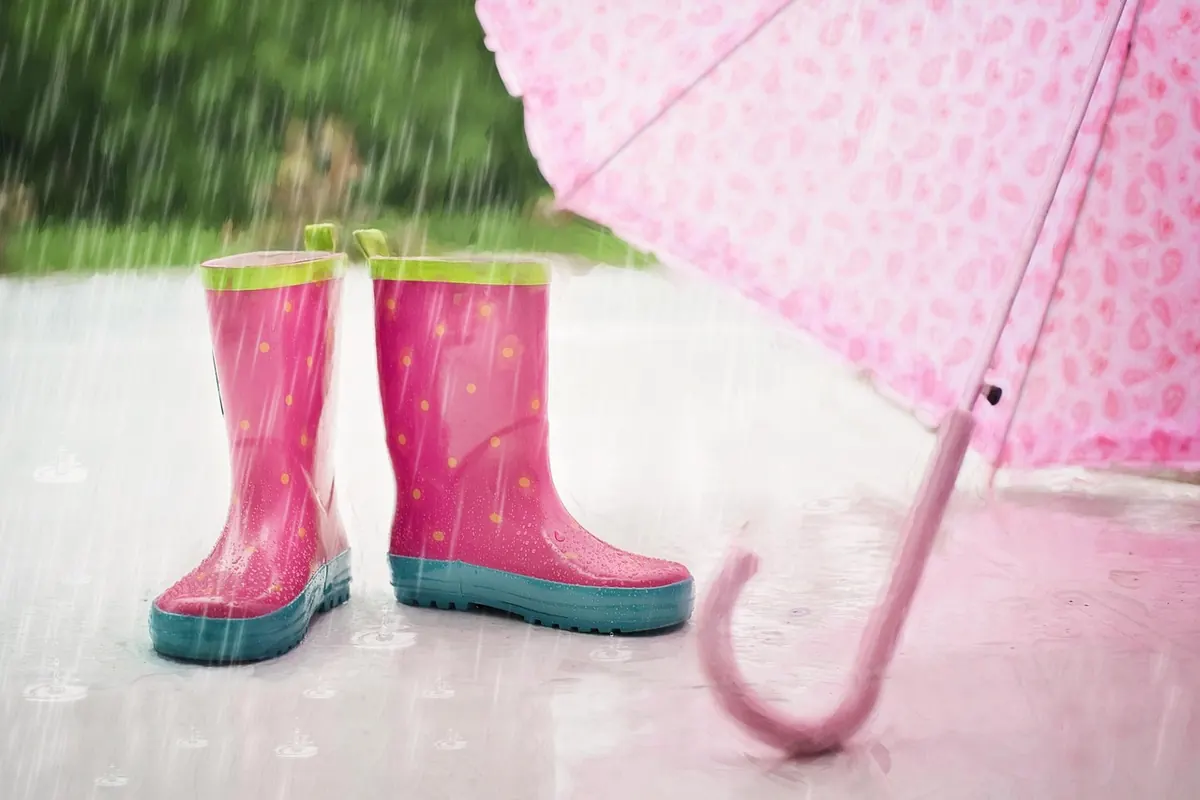
Photo: JillWellington / Pixabay